Upload a photo and get a realistic result in seconds



Drag the slider: the original photo on the left, the AI result on the right




Pick a style and the AI does the rest — no complex settings, no waiting

Pick a style, pose or scene — the AI creates realistic content from your photo
You can undress any photo in a few clicks — and your first sign-in comes with gift tokens
Create an account in a couple of clicks with email or social login
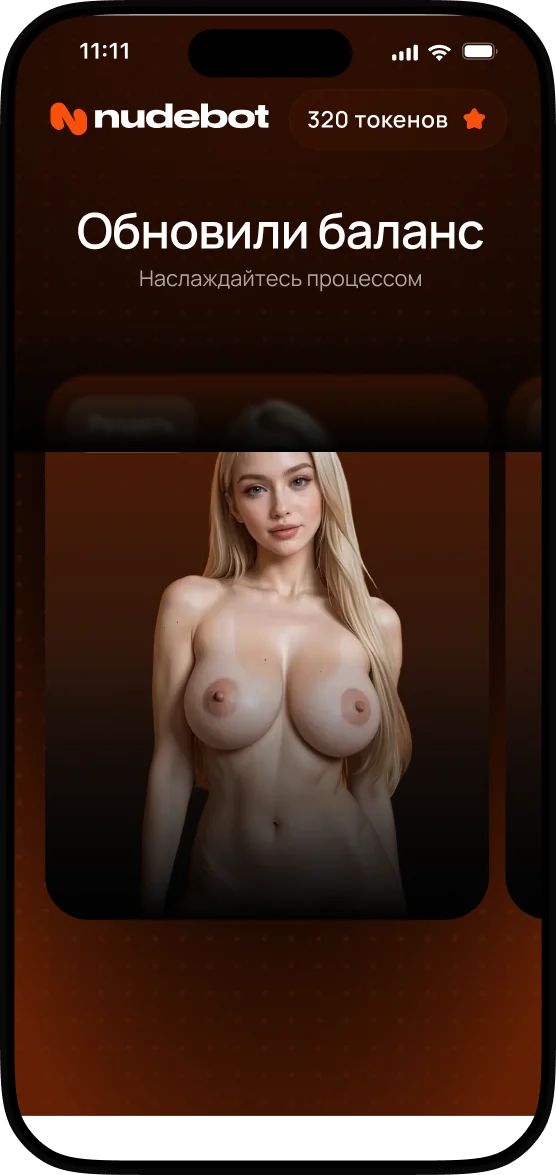
Sign in with Telegram or Google — gift tokens are credited right away as a discount on your first generation
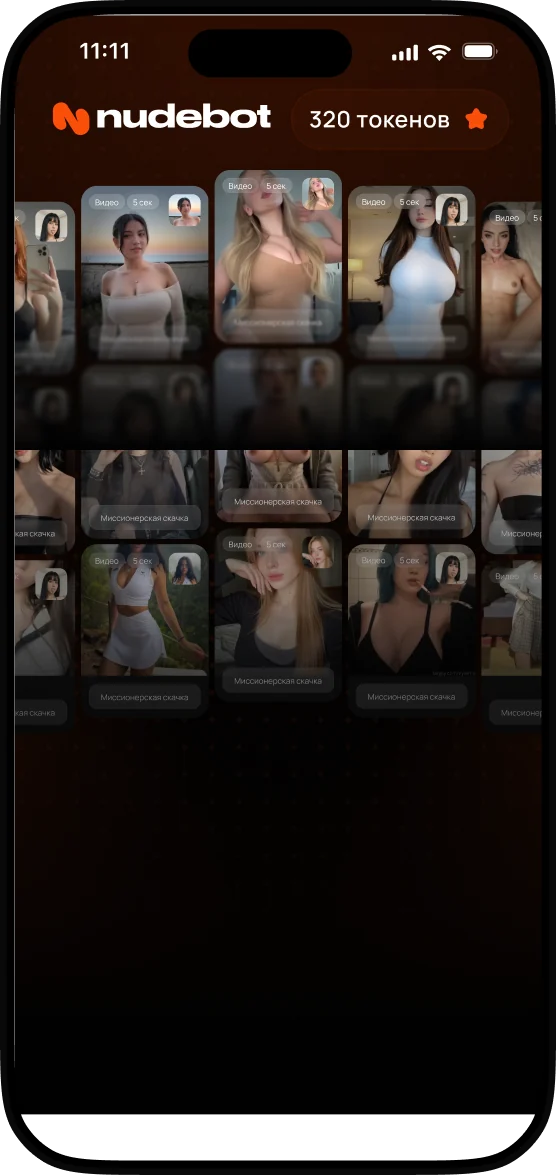
Upload a photo, pick a scene and get a ready photo or video
Everything you need to know about NudeBot
What is an online deepfake and how does it work?
What are the essential steps to create a deepfake video?
What kind of content can I create with AI deepfake editing?
How can I ensure privacy and security when using deepfake services?
Is documented consent always required for deepfake creation?
Online Deepfake Video Editing for Adults
Deepfake technology uses AI to create synthetic media files that can convincingly replace faces and voices in videos. For adult creators, marketers, and digital artists working with consent, this opens a powerful set of creative possibilities. Our онлайн сервис is designed as a consent-based AI editing platform built exclusively for users aged 18 and older. Every workflow on the platform prioritizes privacy, documented permissions, and non-explicit content. Whether you need to create a training video, produce a fictional character for a short film, or generate localized marketing material, these tools give you professional-grade results with responsible safeguards built in.
What Is дипфейк онлайн?
A дипфейк онлайн (online deepfake) refers to identity-aware video transformation powered by artificial intelligence. Modern deepfakes are generated using neural networks and machine learning - specifically architectures like GAN (Generative Adversarial Networks) and auto-encoders - to analyze facial features and reconstruct them onto different footage. Deepfakes can convincingly replace faces and voices in videos, producing a result that blends seamlessly with the original scene's lighting, angle, and expression.
The core concept behind face replacement is straightforward: the system detects a лица в source video frame by frame, encodes identity features from approved reference photos, and decodes the new identity onto the target footage. The output preserves the original motion, head pose, and ambient context while swapping the visible face.
It is critical to distinguish authorized editing from deceptive impersonation. Authorized editing involves explicit consent from every identifiable person, transparency about the synthetic nature of the content, and limited, agreed-upon usage. Deceptive impersonation - using someone's likeness without permission for fraud, defamation, or exploitation - is an entirely different matter. Deepfakes can be utilized for both creative and deceptive purposes, which is why consent documentation is not optional on any responsible platform.
Tools для создания дипфейков
Several technologies exist для создания дипфейков, each with distinct trade-offs for quality, speed, and accessibility. Understanding your options helps you choose the right инструмент для your project.
Desktop and research tools. Approximately 95% of all deepfakes online are made with DeepFaceLab, an open-source framework favored by researchers and advanced editors. FaceSwap is a user-friendly alternative to DeepFaceLab, offering a more approachable interface для новичков who prefer local processing without cloud dependencies.
Mobile options. The Reface app allows quick deepfake creation on smartphones, making it a popular мобильное приложение for short-form content. For projects requiring multilingual voice synchronization, Kapwing supports deepfake scripts in over 40 languages - useful for localized training или marketing content.
Voice-sync capabilities. Some platforms provide voice cloning and lip-sync alignment с помощью neural audio models. These tools match intonation, pauses, and mouth movement to generated or recorded audio, ensuring consistent character rendering across scenes.
Preview controls. Quality-focused tools let you preview every frame before final export. This step catches artifacts - misaligned blending, unnatural lighting, or identity drift - before you commit to a full render. Always inspect results at full resolution before publishing.
Create видео с Face Swap
The face swap workflow follows a clear sequence that applies across most platforms. Here is the standard process to create a face swap video from scratch:
- Upload source footage. Select the target видео in which лица на screen will be replaced. Formats like MP4 and MOV are broadly supported. The cleaner and more stable the footage, the better the result.
- Provide reference photos. Upload high-resolution reference images (PNG or JPG, ideally 1024×1024 or greater) of the person whose лица на the video should appear. Include multiple angles and expressions для работы с different lighting conditions. The model requires this variety to generate consistent identity mapping.
- Face alignment and processing. The system detects the face in each frame, aligns it against the reference image set, and synthesizes the replacement identity. This stage handles expression transfer, pose matching, and edge blending automatically.
- Frame-by-frame review. Before exporting, review every generated frame. Look for temporal inconsistencies - moments where the identity flickers, lighting shifts unnaturally, or the замены лиц produces visible seams. Most tools allow scrubbing through a timeline to catch these issues.
Deepfake videos can be rendered in minutes depending on length and resolution, but review should never be rushed.
Video в Different Formats
Your finished видео и image assets can be exported in multiple formats:
Format
Aspect Ratio
Common Use
Vertical
9:16
Social reels, stories
Landscape
16:9
Presentations, YouTube
Square
1:1
Social feeds, ads
Cinema
21:9
Film projects
Available resolution options typically range from 720p to 4K. Some services limit higher resolutions to premium tiers. Export in PNG for still frames when you need lossless quality на фото и видео assets.
Workflows для новичков
If you have never worked with AI video editing before, start simple. A three-step creation path keeps your first project manageable:
- Gather reference photos. Choose clear, front-facing images with even lighting. Avoid sunglasses, heavy shadows, or extreme angles. Three to five varied expressions are enough to get started.
- Select a short target clip. Pick a video clip under 30 seconds with minimal camera movement and a single visible face. This reduces processing time and makes it easier to spot errors.
- Generate a preview, then refine. Run a low-resolution test first. Check for alignment issues, color mismatches, and motion artifacts. Adjust reference photos or trim the clip if needed, then generate the final version.
You do not need deep editing experience to create a convincing result. Many tools automate the pipeline - your job is to supply quality inputs and review the output carefully.
Workflows для профессионалов
Professional workflows demand a higher standard of consistency, especially for multi-scene projects where identity must remain stable across varied lighting, angles, and environments. Here is what a professional pipeline looks like:
- Multi-scene identity consistency. When working видео с multiple scenes, verify that facial proportions, skin tone, and feature details match across every cut. Some tools offer temporal consistency modeling на основе identity lock features - use them.
- Timeline editing after generation. Post-generation compositing allows you to adjust color grading, add effects, and synchronize audio в одном editing environment. Professional editors often export raw face swap renders and refine them in dedicated video editing software.
- Brand-safe review. Before publication, run a brand-safety checklist. Ensure that no identifiable человека на screen appears without documented consent. Confirm that the content aligns with your organization's guidelines и других applicable policies.
- High-resolution export. For broadcast, cinema, or large-format display, export at 4K or higher. Rendering time increases significantly, so plan your production schedule accordingly.
Responsible видео с AI Editing
Deepfake videos raise serious ethical and legal concerns regarding privacy and consent. Every user of AI-based face replacement technology для работы must internalize these principles:
Documented consent is mandatory. Require written, explicit consent from every identifiable adult whose likeness appears in your content. Consent should specify the use case, duration, publication channels, and reuse permissions. The production of deepfakes requires careful handling of consent and copyright issues - cutting corners here creates legal exposure.
Prohibit deceptive impersonation. Never use someone's face or voice to create material that misrepresents their actions, beliefs, or identity. Deepfakes can violate personal rights without consent, and courts are increasingly willing to impose consequences. In 2023, a Russian actress sued for unauthorized voice use in a commercial deepfake - a case that underscored the real-world stakes.
Disclose synthetic media. Label AI-generated or AI-edited footage visibly. Include a disclosure like "Edited with AI" or "Contains synthetic media" in the video itself а также in descriptions and metadata. Only 17% of people can identify deepfake content accurately, making transparency essential rather than optional.
Check local laws. Creating deepfakes is legal with consent in most countries, but legal frameworks for deepfakes are still developing globally. In the United States, 47 states had enacted some form of deepfake-related legislation by mid-2025. Detection technologies analyze facial features and audio characteristics to identify deepfakes, and regulators are increasingly using these tools for enforcement. Deepfakes pose risks such as identity theft, fraud, and misinformation - responsibilities that fall on creators to mitigate.
Privacy and Security в видео Projects
Privacy protection starts before you upload a single file. Here are the controls to look for - and the habits to build:
- Temporary upload handling. Source footage and reference images should be stored only for the duration of processing. Platforms that retain your data indefinitely introduce unnecessary risk. Confirm that у нас or any service you use implements time-limited storage.
- Deletion controls. You should have доступ к straightforward controls for deleting source media, generated outputs, and any trained models derived from your uploads. If a service cannot confirm deletion, reconsider using it.
- Metadata removal. Strip EXIF data, GPS coordinates, and device identifiers from all files before uploading. This prevents accidental exposure of location or identity information that has nothing to do with your project.
- Secure account access. Use two-factor authentication and strong, unique passwords. Using images or voices without consent may violate privacy laws such as GDPR - and a compromised account could lead to exactly that kind of violation if someone gains unauthorized access to your assets.
Practical Uses для создания Authorized Content
When consent and transparency are in place, the технологии для создания AI-edited video serve a wide range of legitimate applications. Here are use cases that do not involve explicit or exploitative material:
- Fictional character development. Digital artists utilize deepfakes for creating interactive projects - short films, game cinematics, or animated narratives where characters are entirely fictional or performed by consenting actors.
- Localized training material. HR teams create training videos using deepfake technology to adapt a single presentation into multiple regional versions. Deepfakes enhance online courses by making content more engaging and visually consistent across languages.
- Marketing concept testing. Marketers use deepfakes for product demonstrations and brand partnerships, generating internal-only concept videos before committing to a full production shoot. This saves budget and accelerates the idea-to-review cycle.
- Social media content. Deepfakes are used in social media for viral comedic content - face swaps on consenting friends, lip-sync tributes, or creative remixes. The key requirement remains consent from every identifiable person.
Every application listed here assumes чтобы создать this content, you have secured documented consent. No use case justifies skipping that step.
Review Checklist перед публикацией
Before you publish or distribute any AI-edited video, walk through this checklist:
- [] Identity consistency. Verify that facial features, skin tone, and proportions remain stable across key frames. Watch for что то looks like flickering or sudden shifts in appearance.
- [] Lip synchronization. Inspect audio-to-mouth alignment. Even minor delays or unnatural jaw movement break credibility.
- [] Source asset rights. Confirm that you hold usage rights for every reference photo, target video clip, audio file, and any other material used in the project.
- [] Synthetic disclosure. Label the content clearly. Add a visible watermark, on-screen text, or description note identifying the footage as AI-generated or AI-edited.
- [] Legal review. If the content will be published publicly, verify compliance with applicable deepfake legislation in your jurisdiction.
FAQ About Online Deepfake Editing
Do I need editing experience to create a deepfake?
Not necessarily. Many platforms are built для новичков with automated pipelines that handle face detection, alignment, and blending. Your primary responsibilities are supplying high-quality reference photos, selecting appropriate source footage, and carefully reviewing the output. That said, understanding basics like lighting, facial angle variety, and image resolution will noticeably improve your result.
How long does generation typically take?
Deepfake videos can be created in minutes with sufficient image data - a short clip under 60 seconds at standard resolution may take anywhere from a few minutes to an hour. Longer videos, higher resolutions, or multi-scene projects с помощью complex identity mapping can take several hours. Cloud-based services generally process faster than local hardware unless you have a high-end GPU.
What photo and video formats are supported?
Most platforms accept MP4 and MOV for video, and JPG or PNG for reference photos. Reference images should be at least 1024×1024 pixels. Some tools also support raw image formats or multi-angle photo sets for improved identity modeling. Export options typically include HD (720p, 1080p) and 4K in landscape, vertical, or square aspect ratios.
How can I request data removal?
Look for explicit data deletion controls in your account settings. A responsible service will allow you to delete uploaded source media, generated outputs, and any model data at any time. If the platform does not offer self-service deletion, contact support directly and confirm removal in writing. Services with transparent privacy policies and clear data retention schedules are из самых trustworthy options available.
Is it legal to create deepfakes?
Creating deepfakes is legal with consent in most countries. However, legal frameworks for deepfakes are still developing globally, and specific rules vary by jurisdiction. Always verify local regulations before publishing, especially for content featuring identifiable individuals. Describe your intended use clearly in consent documentation to protect both yourself and the people whose likenesses appear.
AI-powered face replacement technology is ready for professional and creative use - but only when paired with documented consent, transparent disclosure, and respect for privacy. Start with a short test clip, verify your permissions, and use the review checklist above before publishing anything. The tools exist to help you generate что-то remarkable. Your responsibility is to use them ethically.